


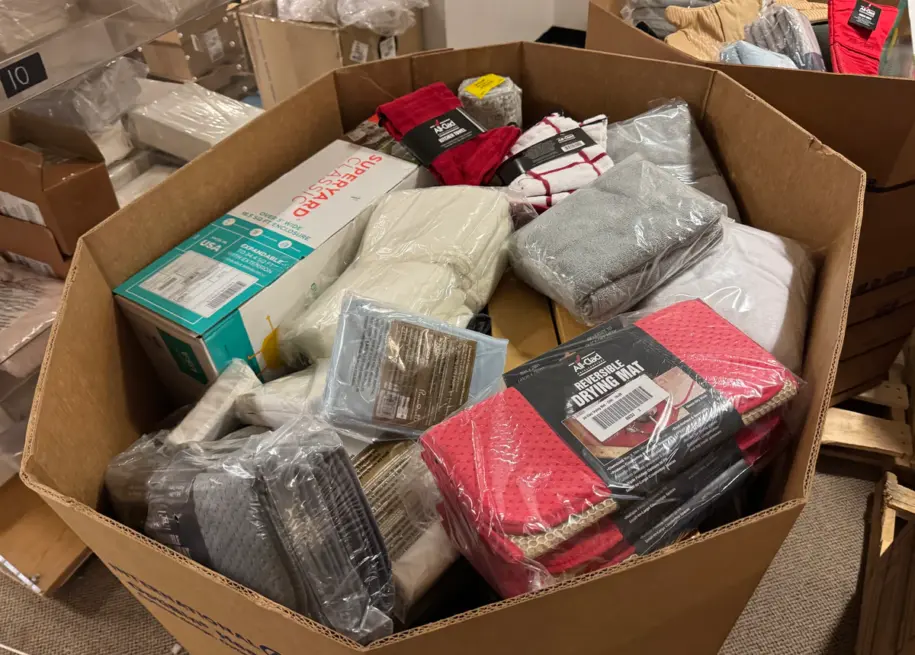
Liquidation pallet grades answer one question: what condition is the stock in? The source type answers a different one: where did it come from? Read only one of them and you will misjudge a lot. Read both together and you can predict workload, price and the best place to sell.
This guide explains the grades, the three source types, how they combine, and a decision matrix to pick a lot by sales channel and by the time you have.
What liquidation pallet grades mean
We grade at lot level, so a grade describes the lot as a whole, not every item in it. These are the definitions we use on our listings.
- Grade A: like new or unused.
- Grade B: fully working, with light wear or damaged packaging.
- Grade C: cosmetic damage, or needs attention.
Because the grade is set for the lot, a Grade B lot may still hold a few better and a few weaker items. Plan for a spread, not a uniform result.
What the source types mean
The source tells you how the stock arrived in the liquidation chain.
- Customer returns: items shoppers bought and sent back, for reasons from wrong size to a fault.
- Overstock: surplus that was never sold, often still in original packaging.
- Shelf pulls: unused items removed from store shelves, which may have sticker marks or worn boxes.
The source sets what kind of variation you should expect. The grade tells you where in that range the lot sits.
Reading grade and source together
A grade means something different depending on the source. The table shows how to interpret common pairings. These are reading guidelines, not promises about any specific lot.
| Pairing | What to expect | Workload |
|---|---|---|
| Overstock, Grade A | Unused stock in clean condition | Light: count and list |
| Shelf pulls, Grade A or B | Unused goods, packaging may show wear or labels | Light to moderate: inspect, clean boxes |
| Customer returns, Grade B | Mostly working items with wear or damaged boxes | Moderate: sort and test |
| Customer returns, Grade C | Cosmetic damage or items needing attention | Heavy: sort, test, price down or sell for parts |
Our buyer’s checklist shows where this reading fits in the wider buying process.
Decision matrix by sales channel
Your sales channel decides how much condition variation you can absorb. Check each platform’s rules for restricted brands and categories before you commit.
| Where you sell | Better fit | Why |
|---|---|---|
| eBay | Grade A or B, any source, with testing for electronics | Buyers search by model and judge condition from your photos |
| Facebook Marketplace and OfferUp | Grade B, returns or shelf pulls | Local buyers accept wear when the price is right |
| Whatnot, Mercari, Poshmark, Depop | Grade A or B apparel and collectibles | Presentation and item-level detail drive sales |
| Bin store or flea-market table | Grade B or C returns, mixed lots | Volume pricing absorbs the weaker items |
| Amazon or Walmart Marketplace | Grade A overstock | Condition and brand rules are stricter |
Decision matrix by processing time
Be honest about the hours you can give each week. A cheaper lot costs you time, and time has a price.
| Time you have | Suggested lot | Plan |
|---|---|---|
| A few hours a week | Overstock or shelf pulls, Grade A | Small pallet, list in batches |
| Part-time, steady | Shelf pulls or returns, Grade B | Sort once, test electronics, list top tier first |
| Full-time or a team | Returns, Grade B or C, larger lots | Set up a sorting line and a parts channel |
If you are weighing pallet size as well as condition, our guide to case packs, pallets and truckloads covers that side.
Common mistakes when reading grades
Buyers new to grading tend to repeat the same few errors. Avoid them and your first order gets easier.
- Treating the grade as a promise about every item. It describes the lot as a whole, so a few items will sit above or below it.
- Ignoring the source type. A Grade B returns lot and a Grade B shelf-pull lot ask for different amounts of testing and cleaning.
- Buying Grade C without a plan for it. Items that need attention only pay off if you have a parts channel, a bin-store table or a discount route ready.
- Paying a premium for Grade A when your channel does not reward it. A table that sells by volume rarely needs like-new stock.
- Skipping the question about the manifest. Where the source provides one, a manifest or category breakdown shows you what the grade is made of.
A worked comparison
Example figures, not a promise about any lot: two pallets each list at $4,000 stated retail. Pallet one is overstock in Grade A and costs more; pallet two is customer returns in Grade C and costs less.
If you spend 3 hours processing the first and 20 hours on the second, the cheaper pallet only wins when the saving covers those extra 17 hours and the weaker items still find a buyer. Put a value on your time before you decide.
Matching grade to the item type
The same grade behaves differently across departments. In apparel and shoes, Grade B usually means light wear or a damaged bag or box, and the fix is an inspection and a wash or wipe-down. In electronics, Grade B means fully working, but you should still test each unit, check that accessories are present and confirm that nothing carries a recall notice.
In tools and small appliances, a cosmetic mark rarely changes how the item performs, yet buyers on some platforms read photos closely. Photograph wear honestly and describe it in the listing. Honest descriptions cut down on disputes and keep your seller record clean.
Questions to ask before you order
- What is the grade, and what is the source type?
- Is a manifest or category breakdown available for this lot?
- Does the lot include electronics or batteries that need safe handling?
- Where will I sell the weakest ten percent of the stock?
Manifests or category breakdowns are available on request where the source provides one, so ask through our contact page. For damaged lithium batteries and recalled items, set them aside and follow the manufacturer’s guidance rather than attempting repairs.
Choose a lot that fits
Match the grade and source to your channel and your hours, then browse the US catalogue. If your plan is to resell on eBay, the general merchandise lots and electronics lots are good places to compare grades. If a lot is returned, the returns page sets out the 14-day terms.




Ready to stock up?
Every price includes freight. Request the current manifest ahead of purchase.
Cookies help this site work better for you. Staying on the site signals acceptance of our cookie policy.
I AcceptYour Cart

All Categories
Search
